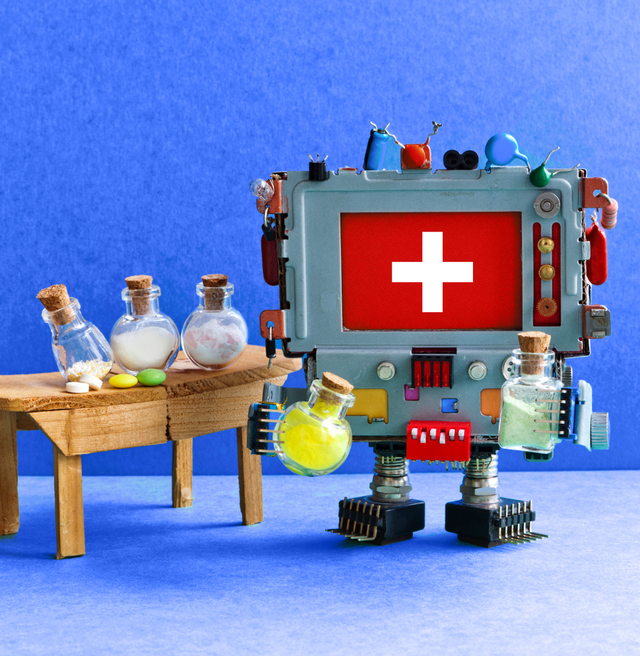
Automate routine tasks with the help of technology so healthcare practitioners can focus on the most essential part of their work—treating patients.
Healthcare software solutions we deliver:
Operational effectiveness is paramount within the healthcare sector since decisions made in terms of resource allocation affect the well-being of the patients. Hospital information systems help manage processes in hospitals, allocate resources effectively, and improve coordination among different departments within the facilities. Modern software for managing hospitals has been shown to increase efficiency.
Remote patient care applications allow healthcare professionals to manage their patients' health even when away from the clinic. Thanks to telemedicine, big data analysis, and continuous monitoring of patient data, remote patient care applications facilitate better engagement of patients, increase care accessibility, and reduce hospital admissions.
One of the essential software systems that is utilized in healthcare today is the Electronic Health Records (EHR). It is a tool that facilitates the management of patient data and helps to improve collaboration among healthcare professionals. Through the use of EHRs, one is able to store patients’ information including prescriptions and lab results.
Personalized fitness and health awareness apps enable users to have control over their own well-being using technology that not only monitors but also helps improve physical and psychological health. These apps provide personal fitness schedules, nutritional tracking features, mental wellness guidance, and integration with wearables.
Internet of Medical Things is an integration of devices, sensors, and healthcare processes used to enhance healthcare delivery and operational efficiency. The software in the IMOT enables real-time monitoring, remote diagnosis, and the exchange of information from the medical devices to healthcare professionals.
Artificial intelligence software is revolutionizing the healthcare industry by handling administration, streamlining processes, and supporting decision-making. The use of artificial intelligence allows healthcare professionals to decrease manual work, reduce errors, and concentrate on patient care.
Our Healthcare software development process
The discovery phase is a crucial step that consists of deep research and planning. Discovery will be done by our team during which we will carry out market research, analyze user needs, and determine technical specifications. As a result of discovery phase, we will be able to make up the map of our journey towards creating a successful product.
Our team designs and implements personalized healthcare solutions tailored to the needs of our clients. Whether you are looking for a healthcare hospital management system or a mobile telemedicine app, our solutions are optimized for efficiency and scalability.
Our experienced software developers can adjust the features and user interfaces of open-source or already existing systems to create efficient healthcare solutions, thus reducing initial costs and accelerating time to market.
Our QA process involves checking the functionalities, compatibility on various devices, and user experience of our healthcare software. We guarantee that your healthcare software will perform optimally and safely, and is highly user-friendly after undergoing our strict testing process.
We offer continuous maintenance services to ensure that your healthcare platform functions without a hitch. Whether through consistent software updates, performance checks, troubleshooting, and enhancement of features, we ensure that your system is up-to-date, secure, and responsive to your users’ needs.
Devstark can enrich your Healthcare software with the following features
Electronic Health Records (EHR) integration
Seamless EHR systems to store, access, and manage patient data securely while ensuring compliance with healthcare regulations like HIPAA and GDPR.
Telemedicine & remote patient monitoring
Virtual consultation tools, video conferencing, and remote monitoring features that allow healthcare providers to track patient vitals and deliver care from a distance.
AI-powered diagnostics & decision support
AI-driven tools to assist in medical diagnosis, risk assessment, and personalized treatment recommendations based on patient history and real-time data.
Appointment scheduling & patient portals
User-friendly interfaces for patients to book appointments, access medical records, receive reminders, and communicate with healthcare providers.
Healthcare data security & compliance
End-to-end encryption, multi-factor authentication, and compliance-focused features to protect sensitive patient information.
Wearable device & IoMT connectivity
Integration with smart medical devices and wearables to track real-time health data, enabling proactive care and early intervention.
Healthcare analytics & reporting
Advanced data visualization and predictive analytics to help healthcare organizations optimize operations, improve patient outcomes, and manage resources effectively.
Automated billing & claims processing
AI-enhanced solutions for automated insurance claims, invoice generation, and billing management to minimize errors and improve cash flow.
Pharmacy & medication management
Systems to track prescriptions, monitor drug interactions, and automate medication refills for improved patient safety.
AI-powered chatbots & virtual assistants
Automated chatbots to assist patients with FAQs, appointment scheduling, symptom checking, and post-care guidance.
Interoperability & system integration
Seamless integration with existing healthcare systems, third-party APIs, and medical databases to ensure smooth data exchange and improved workflow efficiency.
Voice recognition & NLP
AI-driven speech-to-text transcription for medical professionals to dictate notes, update patient records, and generate reports hands-free, enhancing productivity and reducing paperwork.
Technology that can level-up your Healthcare solution
Client spotlight





Our Healthcare software development best practices
Healthcare software must meet strict regulatory standards such as HIPAA (USA), GDPR (EU), and HL7/FHIR to ensure data privacy and security. We prioritize compliance from the start to build legally sound and secure applications.
Protecting patient data is critical. We implement end-to-end encryption, role-based access control (RBAC), and multi-factor authentication (MFA) to prevent unauthorized access.
Healthcare solutions should integrate with existing EHR/EMR systems, medical devices, and third-party APIs. We develop interoperable software using standards like FHIR and DICOM to ensure smooth data exchange.
Healthcare organizations require scalable solutions that grow with demand. Our cloud-based architectures ensure flexibility, high availability, and optimized performance for real-time healthcare data processing.
We incorporate AI-driven automation for tasks like medical imaging analysis, predictive analytics, and clinical decision support, helping healthcare professionals make informed decisions faster.
We design software with clinicians, administrators, and patients in mind. Our focus on intuitive UI, accessibility compliance (WCAG), and mobile-first design ensures ease of use across all devices.
Healthcare software must be error-free and reliable. We conduct manual and automated testing, including functional, security, performance, and usability testing, to ensure flawless operation in real-world settings.
Advantages of Healthcare tech
Better patient care
Using customized health care software allows for faster diagnostics, monitoring from afar, and using AI for decision-making, thus contributing to superior results in treating patients.
Data protection and compliance
Under HIPAA, GDPR, and HL7/FHIR standards, protecting the personal data of patients is highly important. We make sure to provide end-to-end encryption, RBAC access, and cloud-based storage.
Enhanced operational efficiency
Using automation can simplify routine tasks, eliminate mistakes, and streamline processes related to scheduling appointments, billing, and claim processing, thus allowing for increased efficiency.
System integration
Our company creates systems which can easily be integrated into the existing EHR/EMR systems, as well as devices and other applications.
Resource optimization
Through process optimization and automation, healthcare software helps reduce costs, decrease paper usage, and streamline resource allocation for maximum efficiency and profitability.
Remote patient monitoring
Patients can be monitored remotely thanks to IoMT devices, wearable technology, and telemedicine apps that deliver timely medical services without the need for personal meetings.
Data-driven decisions
AI algorithms and advanced analytics generate insights based on real data and help health organizations make informed decisions regarding patient care and resource allocation.
Future-proof technology
Healthcare requirements change with time. That is why our custom solutions are designed to be scalable and capable of integrating emerging technologies such as AI, blockchain, and IoT.
With healthcare software development services, we help health organizations streamline their processes and improve patient experience.
What our clients say: